Pinterested?

Tuesday, October 23, 2012

Margo Oliver’s Hot Water Sponge Cake

Dear Nicole: I have a copy of Margo Oliver's 1975 Menu Cookbook. It contains the recipe to which you referred in your blog of Friday, Oct. 19th  - Barb Lefevre, West Kelowna, British Columbia, Canada.

Dear Barb: Wa-hoo! I first made this cake in the mid-1950s, when I was in my early teens. I said in my blog that I’d move heaven and earth to find this lost recipe, but would you settle for a coffee? This is, indeed, the very Hot Water Sponge Cake I remember! As a writer, I felt compelled to add a few little words to the method, but it’s otherwise unchanged!    xox   Nicole 


Barbara Lefevre: Let them eat cake! 
I can assure readers - especially those who are very young or very old - that this densely packed cake is plain and simple to make. Dress it up with frosting (see the Index for several choices) or dress it down with a dusting of sieved icing sugar over the top.  

This is the perfect recipe for any parent, grandparent, uncle, or auntie to make with youngsters eager to learn about cooking! Thank you, thank you, thank you, Barbara! 

Hot Water Sponge Cake:

¾ c. sifted cake flour (see Note)
1 tsp. baking powder
¼ tsp. salt
3 egg yolks
½ cup sugar
¼ cup boiling water
1 tsp. vanilla
½ tsp. lemon extract

Preheat oven to 350 deg. F.  Grease and flour an 8-in. square pan. Have all ingredients at room temperature.

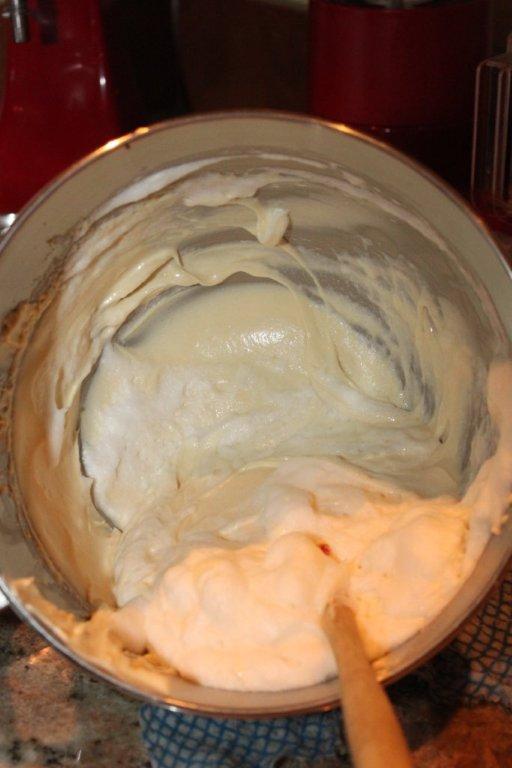
Sift flour, baking powder and salt together. Set aside. Place egg yolks in small mixer bowl, beating at high speed until thick and lemon colored, about 5 minutes. Add sugar gradually, beating until no “grainy” feeling remains as you rub a little batter between your thumb and index finger. 

Reducing mixer speed to low, blend in water and flavorings. Using an “under-over” motion, quickly but gently fold in dry ingredients. Pour into prepared pan, baking about 25 minutes, or until top springs back when lightly touched at the cake’s center, or when a toothpick inserted at the center comes out dry. Cool in pan about 10 minutes, then transfer to rack to finish cooling. Ensure cake is completely cool before frosting.

Note: Over the decades, I’ve gradually stopped using cake flour. For the quantity of flour the recipe stipulates, I prefer to use ¾ c. all-purpose flour plus a scant teaspoon of cornstarch. I almost never sift flour, but do thoroughly combine it and other dry ingredients before adding them to the wet ingredients in any recipe.

When Barb Lefevre found this recipe, I was inspired to pass along two other delicious cake recipes over the next couple of days. I made each for an outdoor Autumn picnic this past weekend. More about that, tomorrow!

Monday, October 22, 2012

Darryl Paulsen’s Spanish Paella

The word “Paella” is pronounced “Pie-yay-yah.” The rest, you’ll learn through the photographs. Easy? Yes, actually.

You may remember Darryl Paulsen of Anacortes, Washington, Home Chef Extraordinaire! If not, here’s his smiling mug. 

Darryl should have been a TV pitchman: As I watched him cook, he occasionally held products up, pointing to their brand name and saying: “Everybody should use this!” or “There’s no better paprika!” If you don’t have exactly the brand of Spanish rice he used or exactly his Spanish paprika, make this recipe, anyway. 

Cooking is a family affair in the Paulsen household. Darryl owes his culinary success to Judy, his wife of nearly 20 years, who encourages him to spend time in the kitchen. Judy owes her life of leisure to Darryl, who takes her up on it. Even Mandy, the Paulsens’ dog, tries to get involved, hopeful of assisting with the clean-up. To Mandy’s chagrin, Darryl rarely drops anything on the floor.

Darryl Paulsen’s Spanish Paella:

3 boneless, skinless chicken thighs, chopped into slightly larger than bite-sized pieces 
Pinch of kosher salt, to taste
Coarsely ground pepper, to taste
Extra-virgin olive oil, as needed (Darryl uses lemon-pressed olive oil)
1 medium sweet onion, finely chopped
4 miniature sweet peppers, finely chopped 
1 garlic clove, finely chopped 
½-to-1 tsp. (2.5-to-5 mL) sweet smoked paprika
2 oz. (60 mL) white wine
3 large chorizo sausages made with Spanish-style smoked paprika (total weight, about 6 oz. or 170 g)
2 c. (500 mL) arborio rice
One 14-½ oz. (398 mL) can diced tomatoes with juice
About 1 qt. (1 L) chicken broth, as needed (Darryl also adds a little Better than Bouillon-brand chicken concentrate, for extra flavor)
1 tsp. (5 mL) saffron
1 tbsp. (15 mL) finely chopped fresh thyme leaves 
1 tbsp. (15 mL) finely chopped Italian flat-leaf parsley
A handful of frozen green peas, to add color
1 lb. (454 g) large, raw prawns, shelled, deveined, and butterflied (see Further Note)
12-to-15 butter clams, in the shell
Extra-virgin olive oil, as required for garnish 

Measure and Prepare All Ingredients Before Starting: 

Chop onions, peppers and garlic together (see Note). Slice sausages into bite-sized chunks. Rinse arborio rice in sieve until water runs clear (Darryl didn’t rinse his rice; I prefer to). Strip thyme and parsley leaves from stems, chopping leaves together to make about 1 tbsp. (15 mL) each; discard stems. You are now ready to begin!


Standard Paella pan: Darryl used a much smaller skillet!


Have all ingredients measured, trimmed, and ready.


Darryl’s plug for Better-Than-Bouillon: “Great in mashed

potatoes!” he says. “And in rice!” says Judy.

No, Dollinks, no one’s being paid to say this!


Darryl stems fresh thyme ...

And parsley leaves.


He chops sweet onions ...


And an equal amount of miniature sweet peppers.


He uses sweet, smoked Spanish paprika.


And large, fresh or frozen prawns ...


Which he butterflies. The traditional clams come later.


He slices chorizo sausage into chunks ...


And chops the chicken thighs.


The cutting board gets a thorough scrub after this!


Saffron goes into this dish.


As well as arborio rice.


Darryl’s Paella requires 2 oz. of wine: 

We require more!


Judy: Ready to assist at a moment's notice!


Mandy wanted to help, too - but

missed the opportunity. 


To Prepare the Paella:

Preheat oven to 325-to-350 deg. F., depending on your pan size.

Heat the olive oil on medium-high. This versatile

skillet goes from stove-top to oven to table.


Lightly season chicken thighs, sautéing in extra-virgin olive oil until no “pink” remains. Remove chicken from pan and set aside. Deglaze pan with white wine. 

Sauté seasoned chicken in olive oil over medium-high heat.


Add onions, peppers, and garlic together with paprika, sautéing until onion appears translucent and peppers are softened. 

The aroma will drive you wild! 


Add chorizo sausage, cooking 3-to-4 min. to concentrate flavors. Stir in arborio rice, coating grains with olive oil-pepper mixture. Return chicken to pan. Add canned tomatoes with juice, a little broth and bouillon concentrate, finely chopped herbs, and saffron (see Note). 

Judy busies herself outside the kitchen.


Stir in arborio rice ...


Broth ...


Tomatoes, tomato juice, and chicken.


Darryl samples the dish to adjust the seasoning, if needed.


Judy supervises.


Continue adding broth slowly, as required. The 

slow addition of broth takes 20-to-25 min.


When rice starts to taste chewy, but not fully cooked, transfer skillet to oven, continuing to add broth, test, and stir a further 15-to-20 min. 


Into the oven it goes!


When rice has absorbed most of broth, stir in peas. Briefly remove skillet from oven and decorate with butterflied prawns and frozen clams. Return to oven a further 10 min.

Under Judy’s watchful eye, our Paella is headed for success!


And so we wait. And wait some more.


Darryl tests clams for doneness after 15 min. He 

decides the dish needs a few minutes’ extra time.


Darryl again tests Paella for doneness - almost!


And out it finally comes! Chicken, clams, sausages, prawns!


Was it worth the wait? Absolutely!


Note: The onion, pepper, garlic, and tomato mixture is known as sofrito - a Spanish tomato sauce made with olive oil, paprika and seasonings. There are many versions of sofrito, each crafted to the taste of the chef.

Further Note: To “butterfly” prawns or foods such as pork chops, slice horizontally, leaving just enough connective tissue so the food is not sliced fully through and can be opened flat. If you think this looks like a Rorschach test, lie on my couch and pay me to analyze your wayward psyche. If you think it looks like a butterfly, you win the big cash prize and the free trip to Fiji. Trust me, Dollinks: This is how you “butterfly” food.

And this ... For more recipes using arborio rice, check out One Click: Risotto and Paella.

Friday, October 19, 2012

Company Plum Cake

I’ve modified this recipe from its original appearance in a now-defunct (but excellent) publication called Weekend Magazine. There, I avidly read Canadian home economist Margo Oliver’s recipes from my early teens (in the Jurassic Age), until the publication folded in the late 1970s. 


I never knew the late Margo Oliver, but she taught me how to cook through the many recipes she tested and published. I regret that I never took the time to drop her a note to thank her. 


Long one of my favorite recipes, Oliver’s Company Plum Cake is a gem I’m more than happy to share with you! Follow these steps in precisely the order given. Making the Streusel Topping before you make the cake will prevent the egg whites and baking powder in the cake from losing their rising power. As always with cake-making, ensure all ingredients are at room temperature.


Company Plum Cake:


To Prepare Streusel Topping:


½ c. (125 mL) brown sugar, packed

1 tsp. (5 mL) cinnamon

¼ c. (60 mL) butter or margarine, softened


Combine brown sugar and cinnamon until thoroughly mixed. Using  a fork, cut in butter or margarine until well-mixed and crumbly. Set aside.


To Prepare Cake:


¼ c. (60 mL) butter or margarine, softened

1 c. (250 mL) granulated sugar

2 large eggs, separated

1-½ c. (275 mL) all-purpose flour

1 tsp. (5 mL) baking powder

½ c. (125 mL) milk

15 prune plums, halved and pitted


Preheat oven to 350 deg. F. If using glass baking dish, preheat oven to 325 deg. F.  Spray-grease 9x9-in. cake pan. Cream butter and sugar until no grainy texture remains when you rub creamed mixture between thumb and index finger. Add egg yolks, continuing to beat well. Combine flour and baking powder in a separate bowl. Add flour mixture into butter-egg mixture in alternate thirds with milk. In another bowl, whip egg whites until stiff, gently folding into batter. 


Pour batter into pie dish, smoothing with spatula. Place halved prune plums lightly onto batter. Sprinkle Streusel Topping over plums. Bake 45-to-50 min. Best served warm. Serves 8.


To Glaze Plums:


¾ c. (185 mL) icing sugar, sifted (“confectioners” or “powdered” sugar)

1 tbsp. (15 mL) whole milk or light cream (see Further Note)

½ tsp. (2.5 mL) almond extract


Combine well, drizzling over slightly cooled cake.


Further Note: I make this cake with low-fat skim milk, but skim milk is too thin for the glaze. Using whole milk or cream produces a far superior result. You can drizzle the glaze from a spoon, but drizzling it from a small funnel or a squeeze bottle will once again produce the best result. 


Prepare Streusel Topping first

Halve and pit prune plums

When no graininess remains, add yolks

Fold stiffly beaten egg whites into batter


Using funnel or squeeze bottle, drizzle glaze over cake. 

Also see: Nicole’s Plum Pie.

Thursday, October 18, 2012

Darryl’s Mexican Eggs

I love breakfast! Given my choice of a restaurant meal, I’ll usually pick breakfast. There’s something irresistible about choosing any wake-up dish I want (prepared by someone else), having bottomless cups of coffee, and lingering over a newspaper (or two, or three). Summer’s gone, but the memories of summer breakfasts al fresco (not to be confused with breakfasts au naturel, which are a completely different thing) are not. Ron prepares cappuccinos in little cups with saucers, and buys croissants from the village baker. On such mornings, with the sun’s warmth on my shoulders, I feel very spoiled, knowing there’s no finer place for breakfast than on our little patio. 

Darryl's Mexican Eggs:

I couldn't get enough of them!

Our friends Darryl and Judy Paulsen of Anacortes, Washington, gave us yet another breakfast choice one recent morning, making us these excellent Mexican Eggs at their house. 

I’m timid about spicy foods, but couldn’t seem to get enough of Darryl’s delicious eggs! Once home, I made them again and again! 

Darryl’s recipe follows: Adjust the timing, quantities, and casserole size to suit the number served, but this is what worked when I prepared these eggs for the two of us!

Darryl’s Mexican Eggs:
5 large eggs
2 tbsp. cold water or milk
Salt and pepper, to taste (optional)
½ c. broken tortilla chips, in bite-sized and slightly larger pieces (see Note)
⅓-to ½ c. green salsa
½ c. prepackaged Mexican-style mix of grated cheeses
Green onions, finely chopped, as garnish

Preheat oven to 350 deg. F. Lightly grease baking/serving dish (I used a circular dish about 7 in. in diameter) Whisk eggs, milk, and seasoning together until well combined. Set aside. Scatter a shallow layer of broken tortilla chips to cover base of dish. Spoon green salsa over chips - not enough to completely cover every chip, but enough to deliver a flavor kick. Pour eggs over salsa and chips. Sprinkle with a generous handful of grated cheese. Bake 20-to-25 min., or until centre is no longer liquid. If necessary, increase heat to 375 deg. F. for a further 5 min. Serve at once, garnished with a flourish of finely chopped green onions. 

Note: The best way to break and measure tortilla chips? Fill a measuring cup with 1 c. whole chips, pressing a clenched fist slowly over them to reduce them to ½ c. broken chips.  Choose thick and sturdy tortilla chips rather than thin ones.

Start with a layer of broken tortilla chips.


Add a shallow layer of green salsa ...


Whisk together ...

… and 5 large eggs.

Pour eggs over salsa and chips.


Sprinkle with pre-packaged mix of grated cheeses.


Serve straight from the oven, piping hot.


Once home, we ate at the coffee table, watching the TV news.


Good to the very last bite!